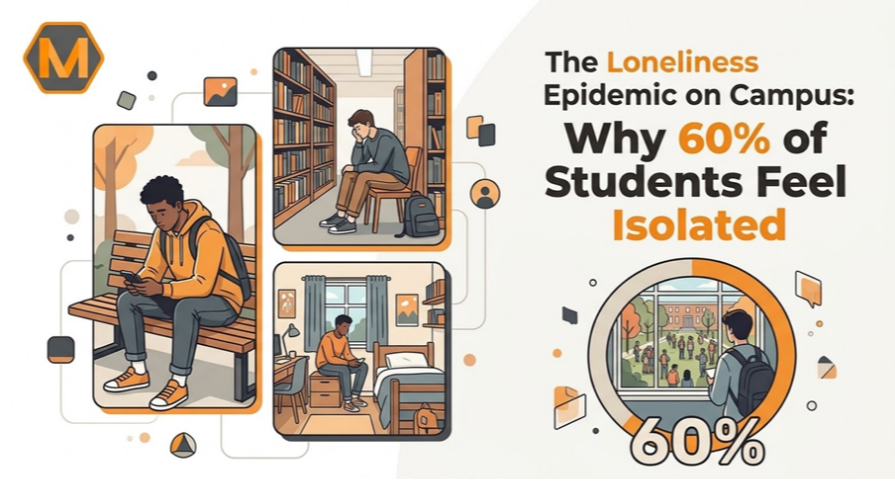
Walking across a crowded university quad in 2026, you would expect to see a vibrant hub of social energy. Instead, the scene is often a sea of students with heads down, eyes locked on glowing screens, and noise-canceling headphones firmly in place. Despite being the most “connected” generation in human history, a staggering 60% of college students report feeling a profound sense of isolation. This isn’t just a “bad mood” or a bout of homesickness; it is a full-blown student loneliness epidemic that is reshaping the landscape of college mental health.
The roots of this crisis are deeply intertwined with the modern academic experience, where the pressure to perform often overrides the need for human connection. When the weight of 2:00 AM study sessions and endless research papers becomes too much, students often pull away from their peers to focus solely on survival. During these high-pressure periods, many find that seeking professional Assignment help from trusted platforms like myassignmenthelp can provide the breathing room necessary to step out of the library and back into a social life. By offloading the mechanical stress of formatting and structured research, students can reclaim the hours needed to actually meet people face-to-face, which is the only real cure for campus isolation.
The Digital Paradox: Why ‘Likes’ Aren’t Enough
One of the primary drivers of digital disconnection is the “comparison trap” fueled by social media. For a college freshman, scrolling through a feed of perfectly curated parties and study groups makes their own quiet dorm room feel like a prison. We are witnessing a digital paradox: the more we interact with avatars and profiles, the less practiced we become in the messy, beautiful art of real-world conversation. In 2026, social media and loneliness are two sides of the same coin, creating an environment where students feel they must “perform” happiness rather than actually experience it.
Research suggests that high-frequency social media use among students leads to a perceived social “deficit.” When you see a group of classmates out for dinner on an Instagram story, your brain registers a “FOMO” (Fear Of Missing Out) response that triggers physical stress. This stress makes you less likely to reach out to others because you feel “less than” or excluded, even if the reality is that those classmates would have welcomed you if you had asked.
The Crushing Weight of University Burnout
In the current economic climate, the stakes for maintaining a high GPA have never been higher. This has led to a rise in university burnout, where students view every hour spent socializing as an hour “wasted” that could have been spent on their career. This transactional view of time is a primary cause for a lack of belonging. When you view your peers as competitors rather than companions, the campus stops being a community and starts being a corporate ladder.
The psychological impact of this constant competition is heavy. Students are no longer just “students”; they are personal brands, internship seekers, and content creators. The cognitive load required to maintain these identities is exhausting. By the time the weekend rolls around, many are too mentally drained to engage in the very social activities that would recharge them.
Managing a full schedule of labs, lectures, and extracurriculars often leads to academic distress, leaving little energy for the spontaneous late-night pizza runs that used to define the college experience. In fact, many students find themselves paralyzed by the sheer volume of their syllabus, often requiring specialized coursework help to navigate the most technical parts of their degree without sacrificing their mental well-being. This type of support acts as a safety net, preventing the common spiral where a single difficult module leads to total social withdrawal.
Comparing the “Old” vs. “New” Campus Experience
To understand why isolation is peaking in 2026, we have to look at how the daily life of a student has shifted over the last decade.
| Feature | The Traditional Campus (Pre-2015) | The Modern Campus (2026) |
| Communication | Physical flyers and face-to-face chats. | Direct Messages (DMs) and Slack channels. |
| Learning Mode | 100% In-person lectures. | Hybrid/Asynchronous video modules. |
| Downtime | Hanging out in “Common Rooms.” | Personal streaming (Netflix/YouTube) in dorms. |
| Academic Pressure | Grades and Graduation. | GPA, Portfolio, LinkedIn, and Side-Hustles. |
| Study Habits | Group study sessions in the library. | Individual “Silent Study” with headphones. |
The Architecture of Isolation: Dorms and Hybrid Learning
The physical and structural ways we learn have also changed. With the rise of hybrid classes, many students spend half their week watching lectures from a laptop in their bed. This lack of physical presence in a classroom removes the “accidental” social interactions that lead to deep friendships—the small talk before a professor starts, or the walk to the bus stop after class.
Campus isolation 2026 is partly a result of this fragmented learning model. If you don’t have to show up in person, you don’t have to engage, and if you don’t engage, you remain a ghost in the machine. Modern dorms are also increasingly designed for privacy, with single-room ensuites replacing the shared “hallway” bathrooms of the past. While more comfortable, this privacy removes the forced interactions that used to bond floor-mates together.
How GPA and Isolation are Linked
Research into GPA and isolation shows a worrying trend: lonely students often see a dip in their grades, which in turn makes them feel more isolated. It is a feedback loop of anxiety and depression that can eventually lead to higher student dropout rates. When a student feels they don’t belong to the campus culture, their motivation to finish their degree vanishes.
When a student is lonely, their “Executive Function”—the part of the brain that helps with planning and focus—actually slows down. It becomes harder to write an essay or solve a math problem when your brain is in “survival mode” due to social rejection. This is why social health is just as important as academic health.
5 Ways to Reclaim Your Social Life on Campus
Breaking the cycle of isolation requires a conscious effort to prioritize “human hours” over “screen hours.” Here is how students are fighting back against the epidemic:
1. The ‘No-Tech’ Lunch Rule
Make a pact with your roommates or classmates to keep phones off the table during meals. This small boundary creates a space for how to make friends in college naturally, through eye contact and shared stories rather than showing each other memes.
2. Join a ‘Low-Stakes’ Club
Don’t just join clubs that look good on a resume. Join an intramural frisbee team, a board game group, or a hiking club. These “low-stakes” environments reduce the pressure to perform and allow for genuine connection to happen without the “networking” vibe.
3. Study in Public, Not in Private
Even if you are working alone, being in a bustling coffee shop or a busy part of the student union can alleviate the feeling of being “cut off” from the world. Psychologists call this “Parallel Play”—the comfort of being around others even if you aren’t talking to them.
4. Schedule Social Time Like a Class
If it’s not in your calendar, it might not happen. Block out two hours on a Friday night specifically for “Zero-Productivity Socializing.” This helps your brain stop feeling “guilty” for not working, because the social time is a scheduled “task” for your mental health.
5. Utilize Academic Support Early
Don’t wait until you are drowning to ask for help. Using Academic Support Services early in the semester prevents the “End-of-Term Panic” that usually forces students to cancel all their social plans for a month straight. When you manage your time better, you have more time to be a human being.
The Road Ahead: Coping with Campus Isolation
As we move further into 2026, the conversation around college mental health must move beyond just “offering counseling.” It needs to address the root causes of why students feel so alone in a crowd of thousands. Universities must redesign spaces to encourage interaction—more community gardens, fewer isolated study pods, and more “unstructured” time in the syllabus.
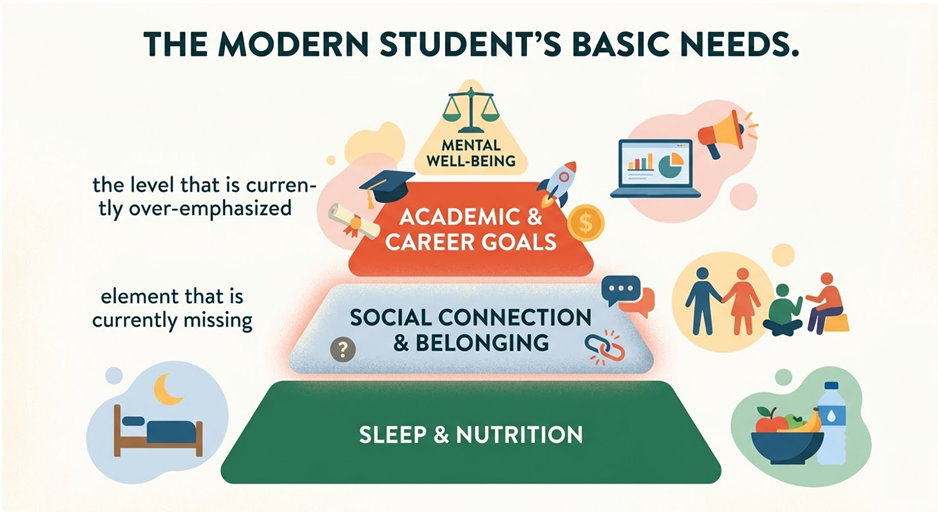
Coping with campus isolation starts with the realization that you are not the only one feeling this way. If 60% of the people around you feel isolated, it means that the person sitting next to you in the lecture hall is likely waiting for someone—anyone—to say hello.
Curiosity about others is the ultimate antidote to loneliness. By shifting our focus from our own anxieties to the stories of those around us, we can begin to dismantle the walls of the student loneliness epidemic. Whether it’s through joining a new group, seeking thesis mentorship to ease the academic load, or simply striking up a conversation in the elevator, every small action counts.
The “Pursuit of Curiosity” isn’t just about learning facts; it’s about learning people. It’s time we made the campus feel like a home again, rather than just a digital login. We owe it to ourselves to look up from the screen, take off the headphones, and remember that the most valuable part of the university experience isn’t the piece of paper you get at the end—it’s the people you meet along the way.
Frequently Asked Questions
Why is student isolation increasing despite digital connectivity?
While digital platforms allow for constant contact, they often lack the emotional depth of physical interaction. Relying on social media can create a “comparison trap” where students feel less satisfied with their own lives compared to the curated highlights of others, leading to a sense of being alone in a crowd.
How does a heavy workload contribute to the loneliness epidemic?
When academic pressure peaks, students often sacrifice social activities to meet deadlines. This “survival mode” leads to chronic stress and withdrawal from peer groups. Over time, the lack of work-life balance makes it difficult to maintain the consistent interactions required to build deep, lasting friendships.
What are the physical signs of campus burnout?
Burnout often manifests as persistent fatigue, changes in sleep patterns, and a lack of motivation. Beyond physical tiredness, students may experience “compassion fatigue,” where they feel too emotionally drained to engage with friends or participate in community events, further deepening their isolation.
Can university architecture influence how lonely a student feels?
Yes. Modern campus designs that prioritize private studios and single-occupancy rooms can unintentionally reduce “accidental” social encounters. Shared spaces, communal lounges, and open study areas are essential for fostering the spontaneous conversations that help students feel like they belong to a community.
About The Author
Ella Thompson is a dedicated education consultant and lifestyle writer for pursuitofcuriosity.blog. With a background in student advocacy, she explores the intersection of academic success and mental well-being. She is a regular contributor at MyAssignmentHelp, where she shares insights on modern campus life and personal development.